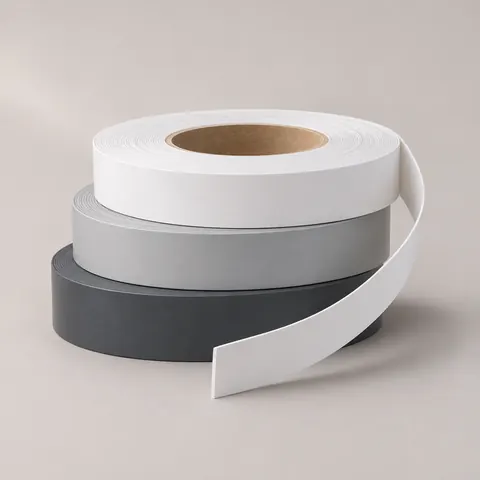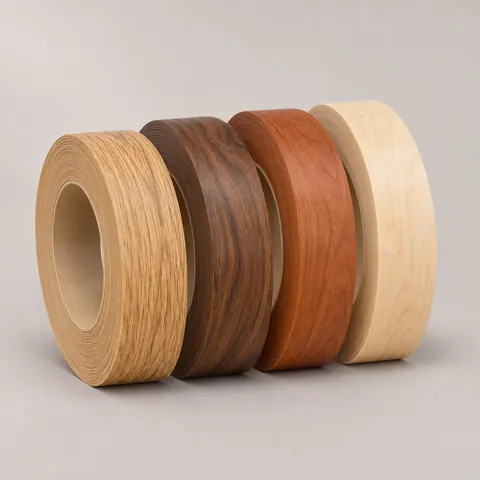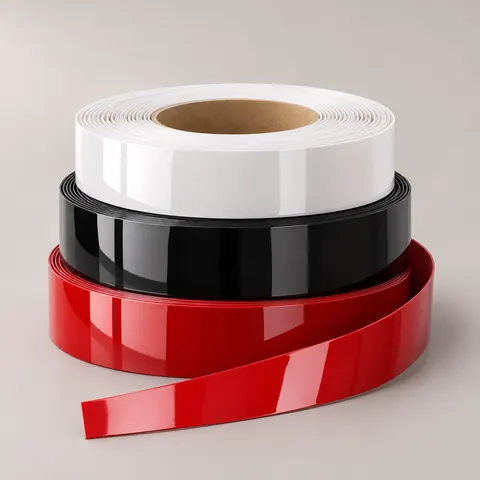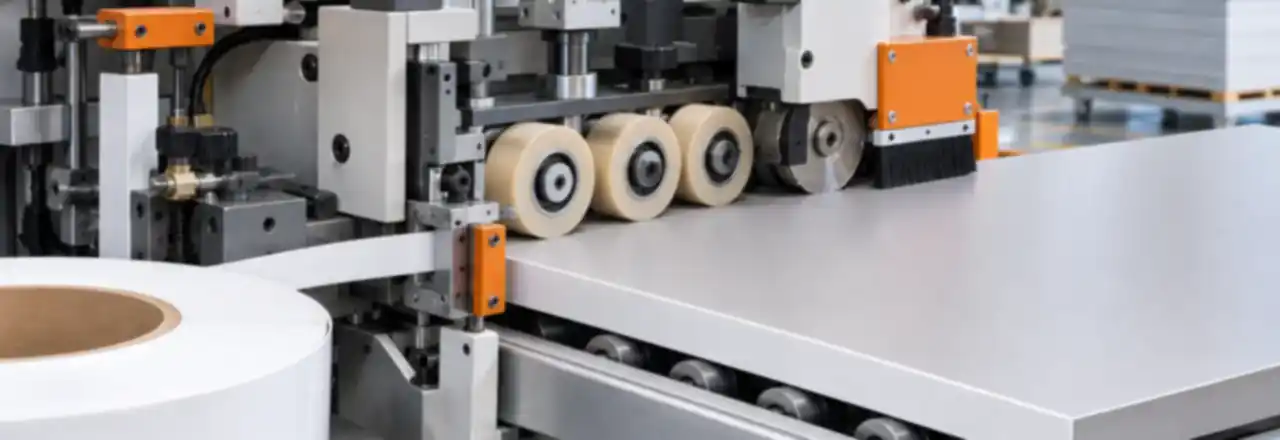
Laser edge banding has a co-extruded functional polymer layer on its back that is melted by a laser, hot-air or NIR unit and fused to the board, giving a joint with no visible glue line and better moisture and heat resistance than hot melt. It requires an edge bander with an activation unit.
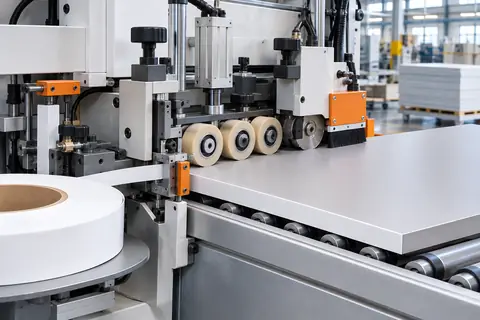
How it works
A standard edge is glued with hot melt applied by the machine. A laser edge carries its own adhesive: a thin functional layer co-extruded onto the back and coloured to match the face. The activation unit melts this layer just before the pressure rollers, and the edge fuses to the board.
Which machines can run it
| Technology | How it heats | Typical user |
|---|---|---|
| Laser | Diode or CO₂ laser | Large, high-speed lines |
| Hot air | Compressed hot air nozzle | Mid-size factories, most common upgrade |
| NIR | Near-infrared lamps | Mid-size factories |
A conventional edge bander with only a glue pot cannot activate the layer. In that case, the closest result is a thin PUR glue line with a matched colour.
Why factories switch
- No visible glue line, even on white and light grey boards.
- No glue pot to clean, faster colour changes.
- Better resistance to steam and heat near dishwashers and ovens.
- A clear premium story for “zero joint” kitchen and wardrobe ranges.
What it costs
Laser edge banding typically costs 15–30% more per metre than standard primed edges. The saving on hot melt, cleaning time and rejects covers part of that, and the premium look usually supports a higher selling price.
Frequently asked questions
Is laser edge banding the same as zero joint?
Yes. “Zero joint”, “zero glue line”, “invisible joint” and “tapacanto láser” describe the same product.
Can I use laser edges on curved parts?
On contour edge banders with an activation unit, yes. Ask us for a thinner 0.8–1 mm version for tight radii.